I have spent a lot of time picking up rocks. This is not what I dreamed about doing as we sat in Melbourne during the city’s sixth lockdown and waited out the three-month settlement period to move to our new farm in central Victoria. That time was spent on cottagecore fantasies and planning out wildly unrealistic renovation schedules.
Then we took possession in October and I’ve been picking up rocks ever since. Rocks and sticks and, for one particularly disgusting week before we had scrubbed down the house, a series of dead starlings that had become stuck in the fireplace and under the oven.
My back hurts. My knees hurt. My knuckles are cracked and bleeding.
I’ve never been happier.
The farm is not really a farm. It’s barely 15 acres – not even enough to be called a hobby block. It came complete with an extraordinary array of sheds and what to me is a classic Australian farmhouse. By which I mean it is a moderately ugly, poorly-aspected collection of enclosed verandahs, complete with accordion door off the living room and old lino that has worn away under the kitchen sink from hours and hours spent washing dishes.
Add 300 novelty teapots and it could be my grandparents’ house.
To most people at the open house inspection, including my partner, it was a knock-down job. He’s since come around. Once we cleaned it up and got rid of the dead birds it was quite comfortable. You can barely tell there were once goats living inside.
Officially, we decided to move to the country and buy a farm in May. Unofficially, I decided when I was three that I wanted to live on a farm and own horses, and all the work that my parents did to convince me otherwise, work that I steadily reinforced throughout adulthood, crumbled in the face of a global pandemic.
It was very important, when I finished high school, to move to the city and leave my country upbringing behind. But now the world was ending and I didn’t even have a pony. What was the point of any of it?
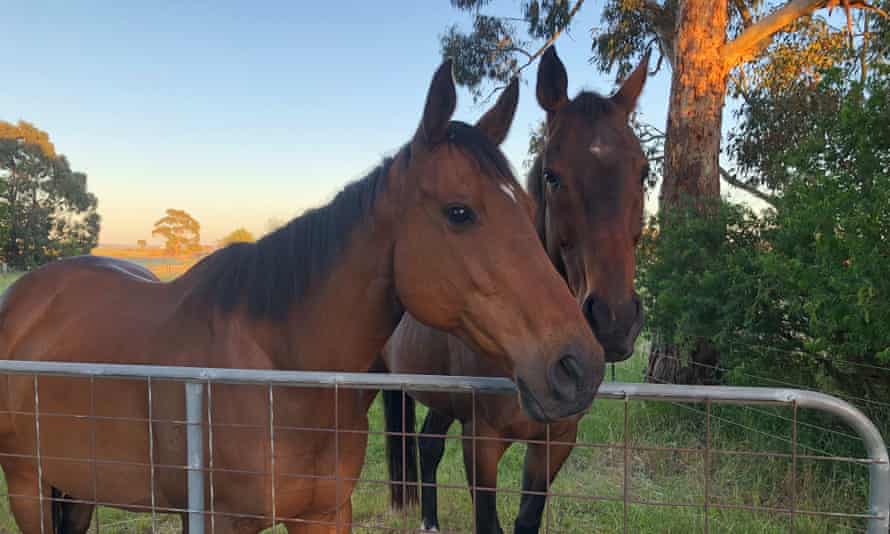
An absurdly privileged position, but there you have it. People were dying, and I wanted a pony.
Before Covid, moving to the country to get a horse felt like a career-killing move. It took a pandemic and nationwide work from home orders to convince me – and thousands of other city-types who moved regionally in the past two years – that it might be possible to keep working and live where we wanted to live.
And that, if we were going to try to have both our careers and our preferred lifestyle, we may as well do it now rather than waiting for that fantastical moment when things would be more settled, when the mortgage would be less crushing, the renovations more affordable.
So we leapt before we were ready, before we could change our minds.
Everything on the farm needs fixing and the cost of fixing anything seems to come to about $3,000. We’ve started referring to $3,000 as one farm unit. A new water tank is one farm unit. Fixing the gutters is one farm unit. Installing solar is two farm units. A secondhand ute is five farm units, so we’re carting fenceposts in my three door Kia Rio.
We have got the important costs covered.
I bought the horse (one farm unit) in the first week. His name is Mickey. Then we got a friend for Mickey, named Rev. We’re currently considering getting a third horse to be a friend for Rev. This is horse maths, a person on Twitter told me. The correct number of horses is always n+1, where n is the number sitting in the paddock right now.
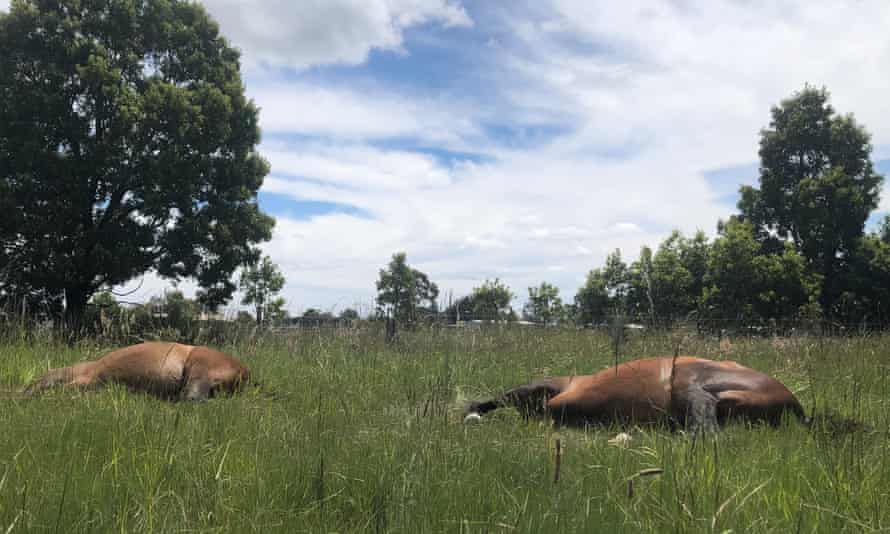
Sometimes, if it is warm and I interrupt Mickey’s nap, he lets me sit next to him while he sleeps. He stretches out in the sun in a daily ritual that, thanks to a horse on Tiktok called Squidward, we call carcass time. And I don’t know, really, how I convinced myself for so long that I didn’t want this life.
Mickey is very good at locating rocks. He steps on them all. And I follow behind picking them up.
Post a Comment